
By the end of today’s lesson, you will be better at:
- Talking about yourself
- Describing different dishes and ways to describe food
- Discussing experiences of foreign food and food preferences in general
- Explaining dishes from your country
- Practice patterns used to describe dishes
- Making generalisations
EATING
SPEAKING
Exc 1
Work in pairs or small groups
- What do you think this woman is making? Where do you think the photo was taken? Give reasons for your answers.
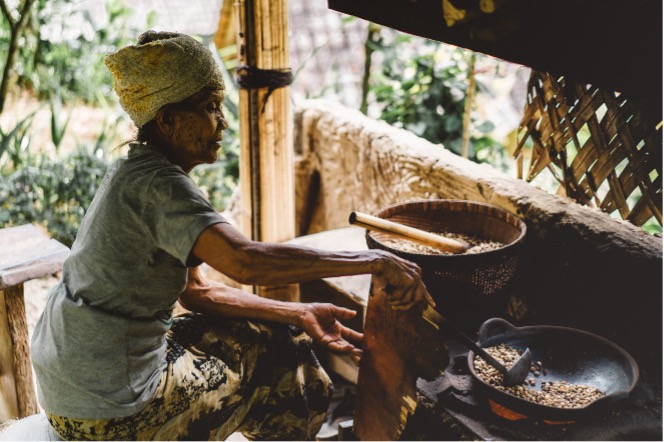
Discuss the questions.
- Are you any good at cooking? If you are, how did you learn?
- What is the best dish you can cook?
- What kind of thing do you usually eat: in the morning? for lunch? in the evening?
- Are you a fussy eater, an unadventurous eater or an adventurous eater?
- Do you prefer to eat out at a restaurant or at home? Why?
Vocabulary: Describing food
Exercise 2
Work in pairs. Label the picture with these cooking verbs:
steam, marinate, deep-fry, mash, slice, stir-fry, grill, boil, roast, grate
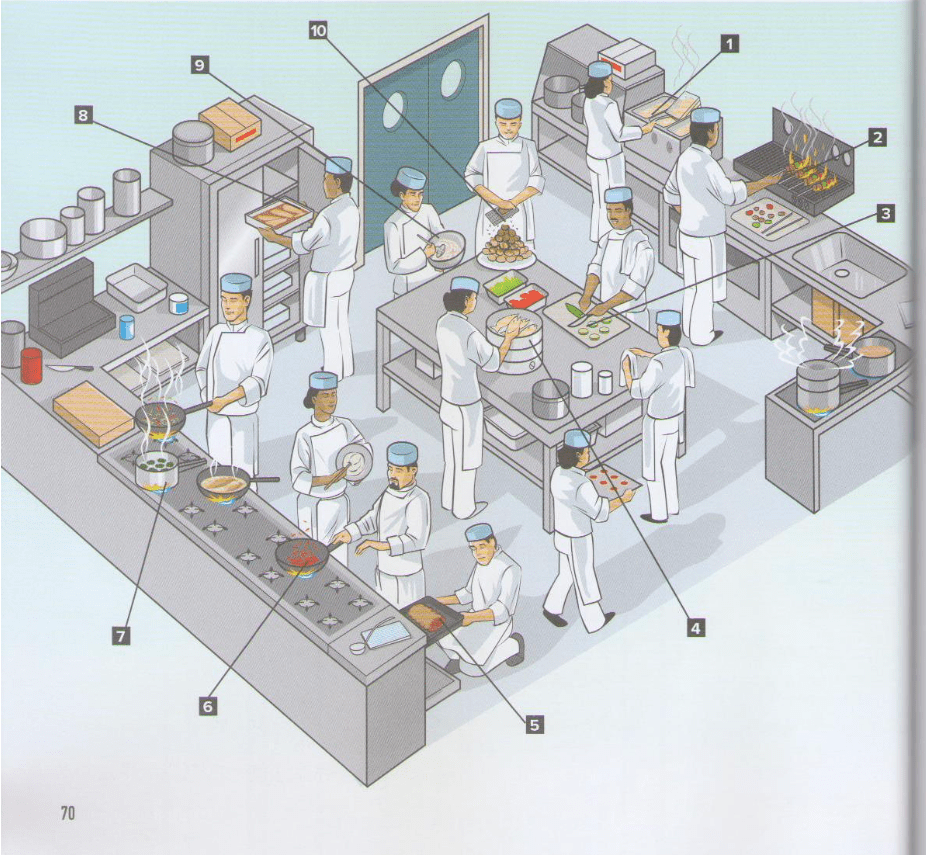
Here are some of the utensils you can see in the picture.
- What would you use these for?

Sometimes we are asked to describe the taste or the texture of food. Follow the link to see how many of the words you know.
https://quizlet.com/join/up4dCMJB5
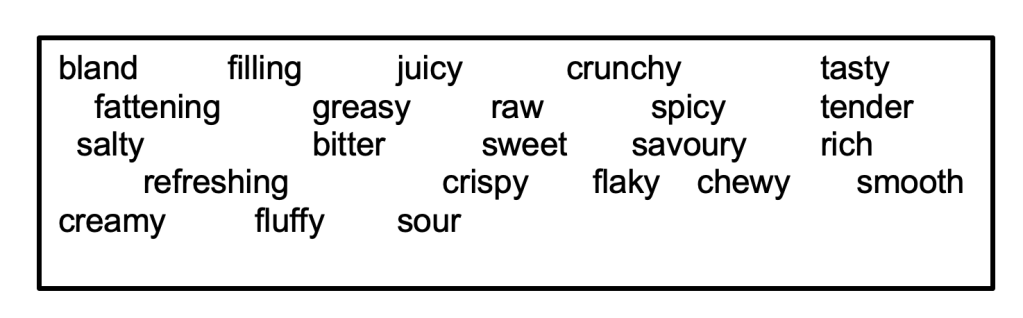
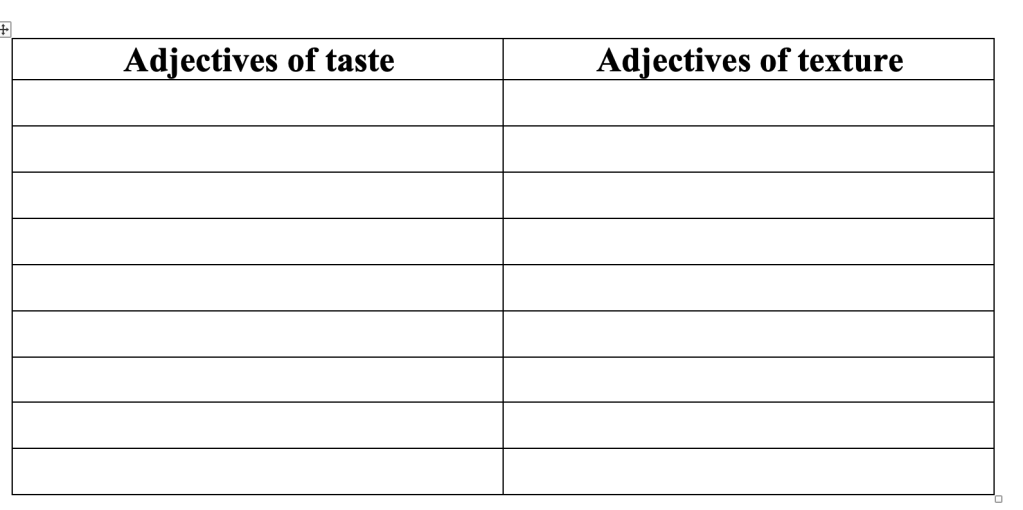
Work in pairs. Here are the words from the Quizlet. Divide them up into words describing taste and words describing texture..
Work in pairs. Look at the photos
- Which of these foods do you eat most often?
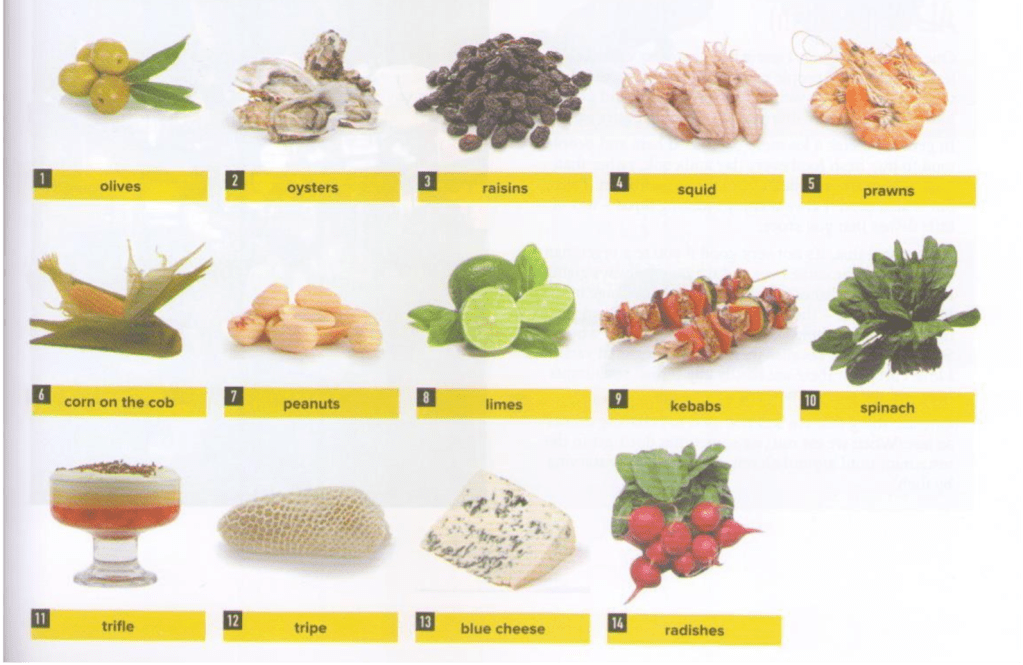
- Are there any things here you have never eaten?
- What’s the best way to cook each one?
- Do you know anyone who can’t – or doesn’t eat any of these things. Why not?
Guess The Food Origin Country Quiz – 50 Countries | Food Trivia
You might consider yourself a foodie, but do you know as much about food origins as you think you do? During this quiz, you will take a quick trip around the globe for a sampling of the world’s finest and most unique foods. While you might have an easy time locating the origin country of some of our food items, others might be a little trickier.
- You will watch a section of a video clip.
- Guess where each of these foods originated. What surprised you?
- Which foods had you never heard of before?
Revision
Match the foods with the methods of cooking.
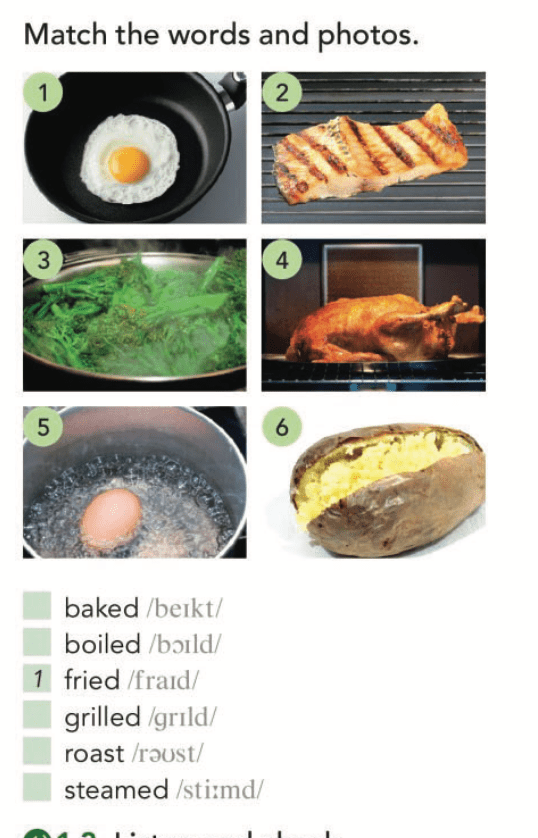
Talk to a partner. How do you prefer these things to be cooked? Why?
1 Chicken
2. Eggs
3. Potato
4. Fish
Match the word and the photos
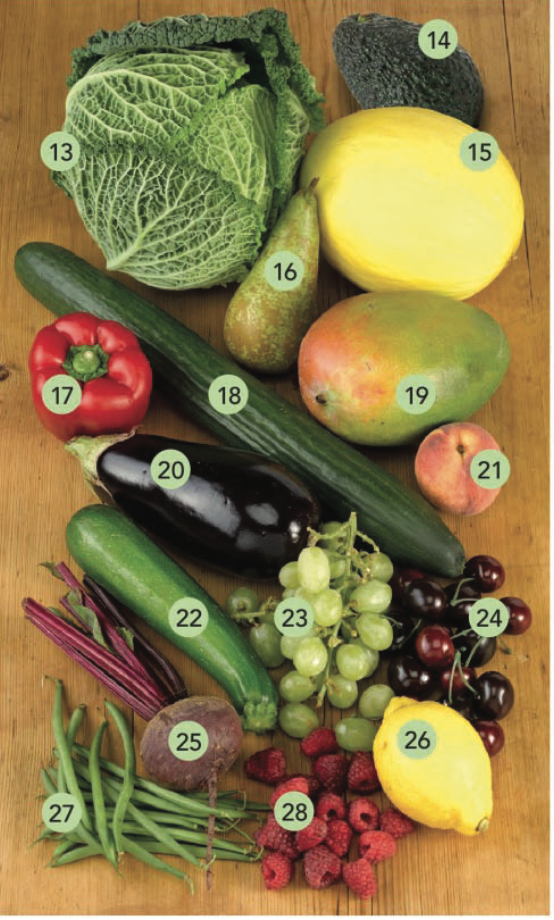
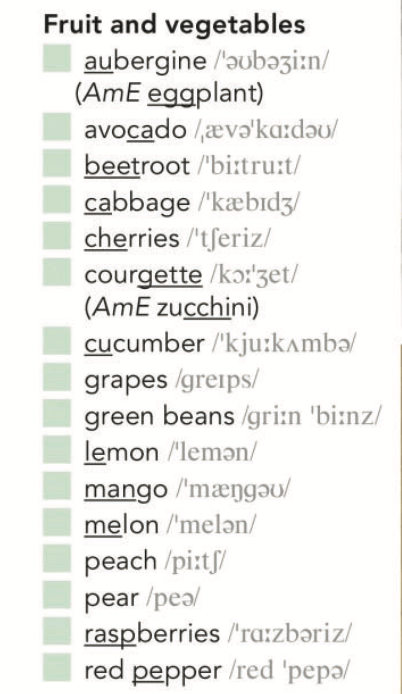
Talk to a partner. Are there any things in this list that:
a) you love
b) you hate
c) you have never eaten
DEVELOPING CONVERSATIONS
Describing Dishes
When we have to explain different foods or dishes, we often use the patterns below:
It’s a kind of vegetable / side dish / spice
It’s a bit like an oyster, but smaller / but not as big.
It’s made from plums or pears / a special kind of bean.
It’s cooked with tomatoes and onions and spices.
It’s often served with ….
It tastes a bit like …….
When it’s cooked, it looks a bit like …..
It has a ……………….flavour.
Look at this food: Do you know its name? How would you describe it ?
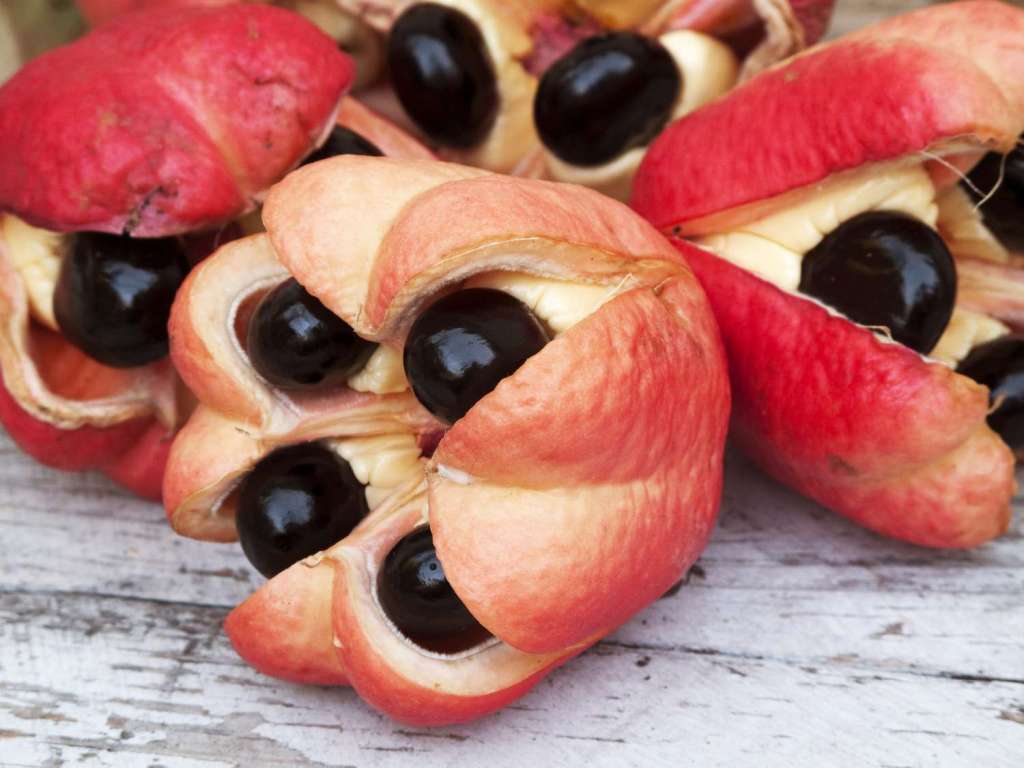
Now look up the Jamaican National dish!
Exc 8.
Think of two different kinds of drinks, dishes, fruit or vegetables from your country. Decide how to describe them using the structures above and any other useful language from this lesson.
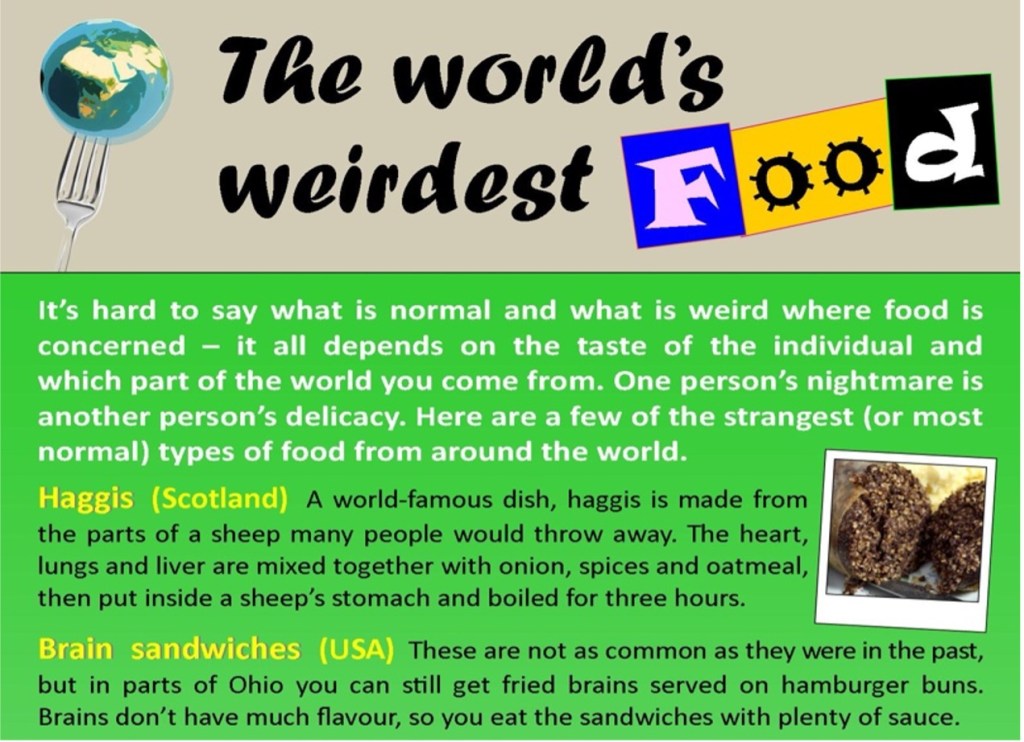
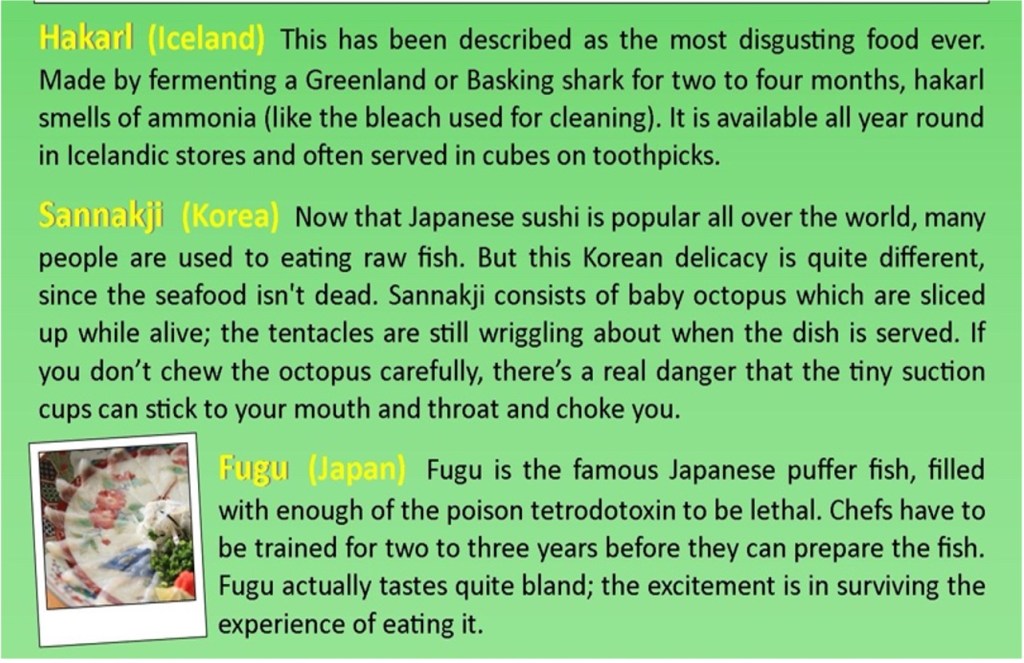
The world’s weirdest food
Exc. 10 Adapted from https://learnenglishteens.britishcouncil.org/skills/reading/b2-reading/worlds-weirdest-food
- Read through the text below.
- Work with a partner. Which of these foods have you eaten before? Which ones would you NOT eat? Why?
What’s the weirdest food you’ve ever tried? What was it like? Follow the link
https://padlet.com/siobhan_sweet30/qinjigz0z1s8p5os
- Add your comments and, if possible a picture, to the Padlet wall.
- Describe the weirdest dish you have ever eaten. Remember to use the new vocabulary you have learned.
- Comment on the dishes described by at least two of your classmates.
 Sweet English 120