Domestic animals are once-wild animals that have been captured for many years and conditioned to adapt to different living conditions in the farm or households. Mainly, they are captured for economic reasons. Pets are domestic animals, but they were animals that were originally captured for companionship and not for economic reasons. Pets stay with humans in the household most of the time. Other domestic animals, on the other hand, seldom stay in the households. Both pets and domestic animals depend on humans for survival.
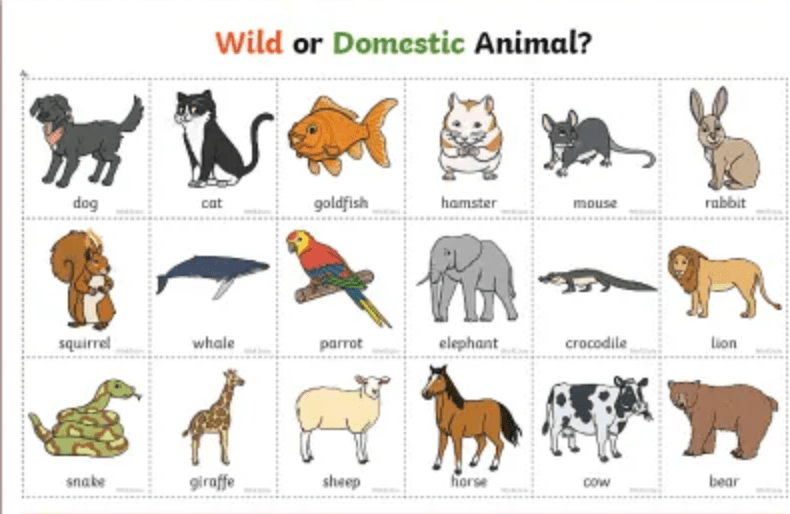
Look at the pictures below. Which of these animals are domestic animals? Which ones are wild?
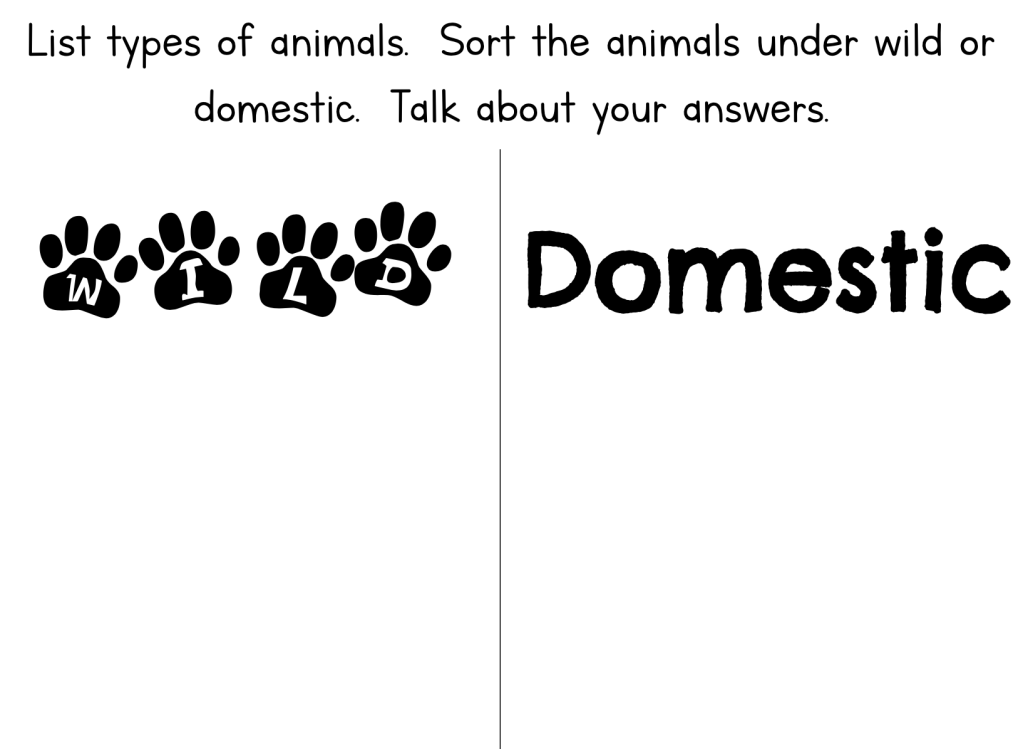
Draw a table with two columns like the one below. Make a list of as many wild and domestic animals you can think of. Put their names in the right columns.
Can you think of some common pets people have at home in your country?
What do you need to do to care for a pet and keep it healthy?
Do you know of anyone who has more unusualanimals at home – animals that are not normallydomesticated but usually live in the wild?
What problems do they have taking care of wild animals?
An amenity is something that is intended to make life more pleasant or comfortable for people e.g. hair dryers in every room, gym, wi-fi, pet-friendly spaces, parking etc. What amenities does the hotel offer?
How much does a room cost?
What are check-in and check out times?
How many stars does this hotel have? What does this mean?
Find two reviews of this hotel – one good one and one bad one. What did people like /dislike about this hotel? Why do you think these people’s opinions differed?
Here are some typical phrases and expressions to use when a guest makes a booking to stay at your hotel. Review these expressions and read the sample conversation. Then check your understanding with the quick quiz.
These are typical phrases and expressions to use when a guest checks in or checks out of your hotel. Review these expressions and read the sample conversation. Then test your understanding with the quick quiz.
You might consider yourself a foodie, but do you know as much about food origins as you think you do? During this quiz, you will take a quick trip around the globe for a sampling of the world’s finest and most unique foods. While you might have an easy time locating the origin country of some of our food items, others might be a little trickier.
• You will watch a section of a video clip.
• Guess where each of these foods originated. What surprised you?
When we have to explain different foods or dishes, we often use the patterns below:
It’s a kind of vegetable / side dish / spice
It’s a bit like an oyster, but smaller / but not asbig.
It’s made from plums or pears / a special kind of bean.
It’s cooked with tomatoes and onions and spices.
Exc 1.
Think of four different kinds of drinks, dishes, fruit or vegetables from your country. Decide how to describe them using the structures above and any other useful language from this lesson.
Exc 2.
Work in groups. Take turns to describe your food. Can the rest of the group guess what you are describing?
Sometimes we are asked to describe the taste or the texture of food. Follow the link to see how many of the words you know.https://quizlet.com/join/up4dCMJB5





 Sweet English 120